


Worried you will not sleep tonight? Repeated clock-checking, rehearsing tomorrow's problems and trying to force sleep can leave you more alert. A useful first step is to give the worry somewhere to go before bedtime and choose one manageable response if you lie awake. Persistent fear or insomnia deserves support beyond a bedtime routine.
Perhaps you feel sleepy on the sofa, then tense as soon as you get into bed. Or you spend the evening calculating whether there is still time for enough sleep. Here, “sleep anxiety” describes that worry around sleep. It does not identify a diagnosis or explain every difficult night.
Why worry about sleep can keep you awake
After a difficult night, it is understandable to want certainty about the next one. But sleep does not respond reliably to extra effort. Checking for signs that it is happening can become another task that keeps your attention busy.
-
Prediction
“If I do not sleep soon, tomorrow will be a disaster.”
-
Checking and effort
You count the hours left, check how sleepy you feel or repeat a ritual until it feels right.
-
More alertness
You notice that you are still awake. That seems to confirm the prediction, and the worry starts again.
Stress and anxiety can increase alertness, while a poor night can make the next day harder. The NHS overview of sleep problems explains this connection. Pain, medicines, breathing problems and other sleep conditions can also play a part. Fear of nightmares or a traumatic event needs its own assessment.
What you can try tonight
Choose one idea that fits your situation. These are options to experiment with, not a sequence you must finish before you are allowed to sleep.
Give tomorrow's worry a next step
Earlier in the evening, write down the concern and one action you can take tomorrow. For example: “I am worried about the meeting. I will review my three main points after breakfast.” If the problem cannot be solved now, you can still name when you will return to it. The NHS describes this approach in its guidance on setting aside time for worries.

Make the clock less available
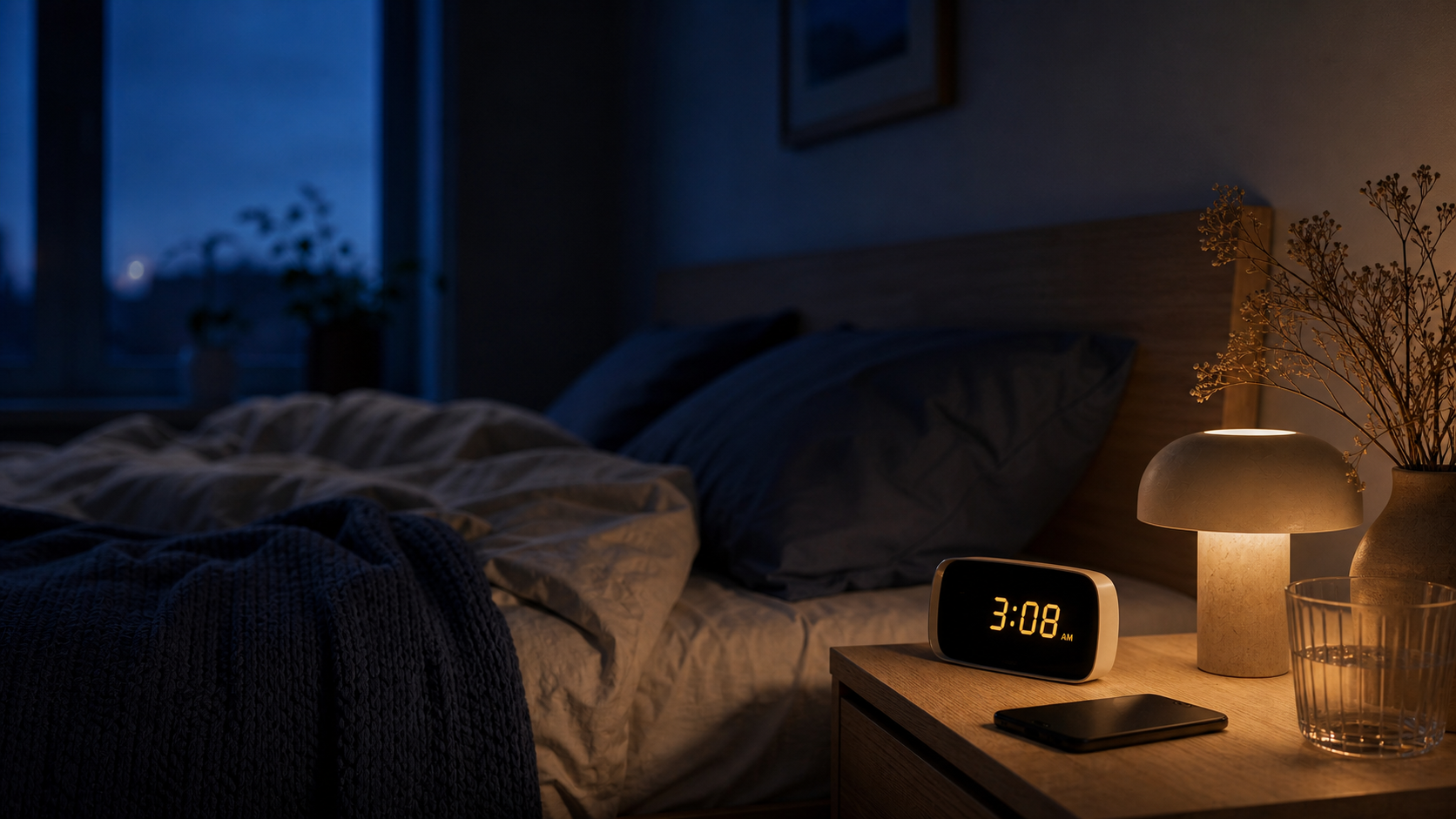
Set the alarm once and turn the display away. If checking sleep scores makes you more anxious, consider a break from them. Avoid replacing the clock with another countdown, such as tracking precisely how long a breathing exercise takes to “work”.
Have an option for uncomfortable wakefulness
If you are comfortable and resting, you do not have to test whether sleep has arrived. If you are wide awake and frustrated, consider getting up for a quiet activity, such as reading in gentle light, and returning when sleepy. You do not need a stopwatch. This follows the broad principle in NHS advice about not forcing sleep.
Only move if it is safe and practical. If pain, limited mobility or caregiving makes leaving bed difficult, ask a clinician how to adapt the approach.
Before an early meeting: two possible responses
Imagine an ordinary situation: tomorrow starts early, you are still awake, and your mind jumps ahead to making a mistake at work. This is a hypothetical example, not a customer account.
Adding pressure
You keep subtracting minutes from the night, rehearse the meeting in bed and start your routine again because you missed a step.
A possible alternative
You note the one task that actually needs attention tomorrow, put the clock out of view and choose a quiet activity if lying in bed becomes a struggle.
The alternative does not promise immediate sleep. It gives you something practical to do without making sleep another deadline.
When sleep tips are not enough: CBT-I
Cognitive behavioural therapy for insomnia (CBT-I) is a structured treatment for persistent insomnia. It works with sleep-related thoughts and behaviours, including the association between bed and wakefulness. It can include an individually planned sleep schedule. NHLBI recommends it as the usual first treatment option for long-term insomnia.
The American Academy of Sleep Medicine guideline recommends multicomponent CBT-I and advises against sleep hygiene alone as treatment for chronic insomnia. Ask a qualified clinician about an appropriate programme; do not construct a restrictive sleep schedule from a blog. If trauma, panic or recurrent nightmares are central, explain that when seeking care.
A checklist for asking for help
Speak to a healthcare professional if any of these apply:
- You regularly delay bedtime because of fear.
- Sleep difficulties persist, or affect work, mood or daily life.
- Nightmares, panic or distressing memories keep returning.
- You wake gasping, or someone notices breathing pauses.
- You rely on alcohol or non-prescribed medicines to face the night.
Describe what you fear, when it began and how you feel during the day. These details help a clinician look beyond habits. Do not drive when sleepy. The NHS insomnia guide explains when to see a GP and what an assessment may involve.

Share:
A Better Bedroom for Sleep: Light, Noise and Comfort