

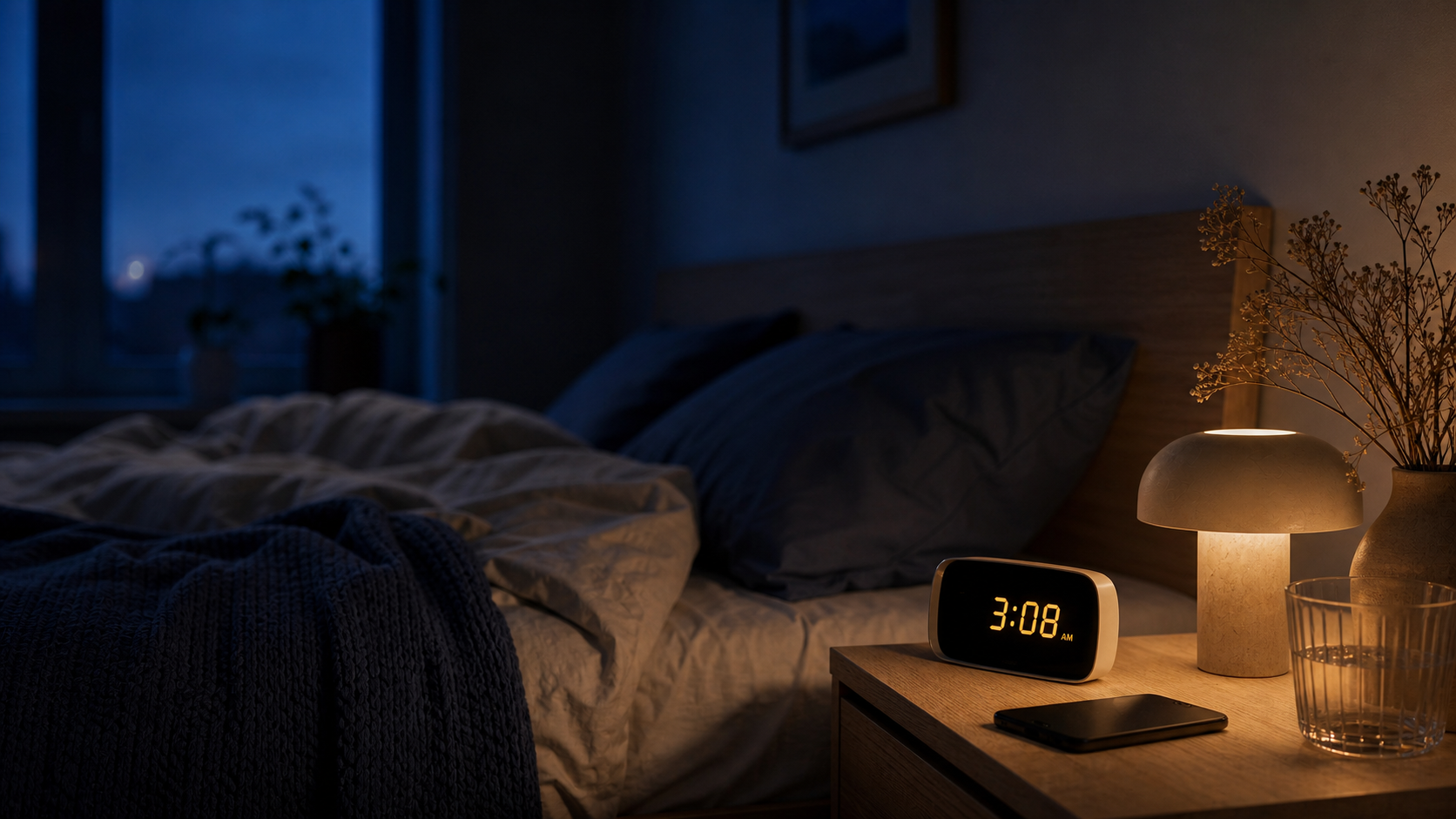
Waking at 3 a.m. does not point to one specific cause. Brief awakenings can be part of normal sleep. What deserves attention is repeatedly staying awake and struggling the next day. For tonight: put the clock out of view, deal with any obvious discomfort and, if you are wide awake, take a quiet break from bed until you feel sleepy.
What happens around the awakening: a noise, warmth, needing the bathroom or thoughts that gather pace? Start there before trying to explain the exact hour.
Awake at 3 a.m. and cannot get back to sleep?
- Turn the clock away. Set your alarm beforehand. Recalculating the hours left can make you more worried; avoid opening your phone to check.
- Make one small adjustment. Use the bathroom if needed, loosen a cover or block intrusive light. Use enough light to move safely, without lighting the whole room.
- Give yourself a moment. If you still feel drowsy, settle comfortably. Let your jaw and shoulders soften. You do not need to complete an exercise.
- Take a break if you feel fully awake or frustrated. Move to a comfortable place, read a few pages of something undemanding or listen quietly. Return to bed when sleepy. There is no need to time this with a stopwatch.
- Leave tomorrow’s decisions for daylight. Work messages, shopping and searching for a diagnosis can wait. If a task keeps coming back, jot down a brief reminder and put it aside.
Leaving bed when you cannot sleep is part of stimulus control, used in insomnia treatment. If getting up is unsafe because of limited mobility, dizziness or a risk of falls, ask a healthcare professional how to adapt it.

Why you might wake in the middle of the night
You can briefly wake between sleep cycles, and more deep sleep usually occurs earlier in the night. That helps explain why waking can be normal; it does not identify the cause of a prolonged awakening. See the NHLBI explanation of sleep stages.
| What you notice | What to check or try |
|---|---|
| Light, noise, heat or discomfort | Check curtains, heating schedules and bedding. Change the disturbance you can identify, then see whether it helps. |
| Waking after evening alcohol or late caffeine | Move caffeine earlier and avoid using alcohol as a sleep aid. Alcohol can make sleep lighter later in the night. |
| Worry starts as soon as you wake | Try the steps above. Make time during the day to address the concern or talk it through. |
| Your bedtime or work schedule has changed | Keep a reasonably consistent rising time. If you work shifts, discuss advice that fits your actual sleep hours. |
| Pain, hot flushes, repeated bathroom visits or restless legs | Record the symptom and discuss recurring problems with your GP. Mention any recent medicine changes. |
These are clues, not a diagnosis; several can overlap. The NHS overview of insomnia covers common causes. For a room disturbance, use our guide to light, noise and bedroom comfort. If worry is becoming the main problem, read about the cycle of sleep anxiety.
What to note for the next week or two
Fill in a short sleep diary each morning. Estimate bedtime, waking periods and rising time. Include naps, caffeine or alcohol, and daytime sleepiness. A notebook is enough; you do not need a wearable. A diary also helps with assessment, as explained in NHLBI guidance on insomnia diagnosis.
Choose one change you can sustain, such as getting up at a consistent time or moving caffeine earlier. Compare several nights, including daytime concentration and sleepiness. A single better or worse night cannot prove what caused it.
Three questions the clock cannot answer
Does waking at 3 a.m. mean a cortisol problem?
The time alone cannot establish a hormone disorder. A clinician considers symptoms, health history and, when needed, tests. Claims that a specific wake-up hour identifies a particular organ or hormone problem go beyond what that observation can tell you.
Do I need to sleep through without ever waking?
No. Brief awakenings occur in normal sleep. The more useful distinction is between a passing wake-up and long, repeated periods awake that affect your day.
Will buying a sleep aid solve it?
A sleep mask can block unwanted light if that is the disturbance. It cannot treat the other causes in the table. Do not add or change sleep medicines without advice from a doctor or pharmacist.
When to speak to your GP
Book an appointment if waking persists, changes to your habits have not helped, or poor sleep is making daily life difficult. You can seek help before the problem has lasted for months.
Get advice sooner for breathing pauses, gasping or choking during sleep, especially with loud snoring and daytime sleepiness: these can be signs of sleep apnoea. Also mention recurring physical symptoms, a significant mood change or a new medicine. Do not drive when sleepy.
For lasting insomnia, ask about cognitive behavioural therapy for insomnia (CBT-I). It works with sleep habits and sleep-related thoughts; it involves more than a bedroom checklist.

Share:
A Better Bedroom for Sleep: Light, Noise and Comfort