

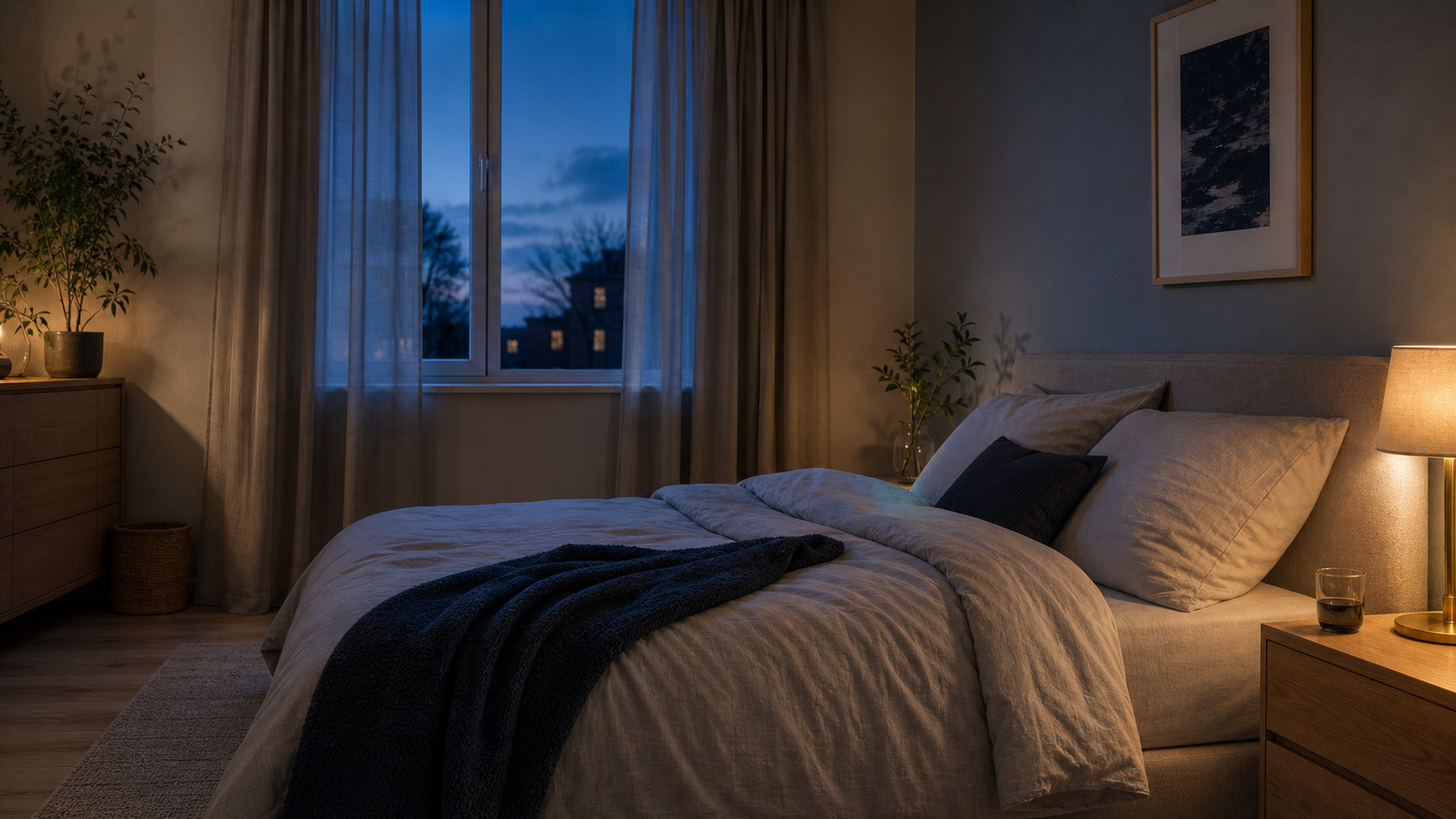
A better bedroom starts with the thing that disturbs you. Light on your pillow, a rattling window and bedding that feels too warm need different solutions. Find the clearest problem, try one small change and judge whether that problem improves. You do not need to redesign the room.
A room can look restful and still be uncomfortable to sleep in. This guide is a practical check for an adult bedroom, including rented rooms and shared spaces. It helps you choose what to change before you spend money.
Check the room from your pillow
Look from where you actually sleep, with the lights and curtains as they usually are at night. You may notice a gap that is invisible when you stand by the door. Use the table to choose a starting point, not a list of jobs to finish tonight.
| What you notice | First thing to try | What to check afterwards |
|---|---|---|
| Light reaches your face | Close the curtain gap or turn an indicator light away. | Is the pillow area darker, with a safe route out of bed? |
| An intermittent sound wakes you | Find the source: an alert, vibration, door or loose fitting. | Has that particular sound stopped? |
| You throw the duvet off | Try a lighter cover or a removable layer. | Are you less hot, without becoming cold? |
| Your pillow feels awkward | Check its height in your usual sleeping position. | Can you settle and turn without obvious strain? |
Blackout curtains or a sleep mask?
The NHS recommends a dark, quiet bedroom and comfortable bedding. Curtains and a mask address unwanted light in different ways; neither guarantees sleep.
Curtains or blinds
Useful when light affects the whole room. Check the sides, centre and top before replacing anything. In a rental, ask about fittings before drilling.
A sleep mask
Useful for travel, daytime sleep or a partner who reads in bed. Check whether light leaks around the nose and whether the strap or eye area bothers you when you lie on your side.

If a mask solves a problem you have identified, compare the fit, materials and care instructions in our sleep mask collection. If your room is already dark enough, a mask may add nothing useful.
Start with the source of noise
Before adding a sound machine, check what makes the noise. Move a vibrating phone off hard furniture, silence non-essential notifications and check loose fittings. If you share a home, agreeing when music, washing machines or calls stop may be the most useful change.
A fan or steady background sound is an optional experiment. Keep the sound quiet and comfortable. Stop if it distracts you, and make sure you can hear alarms or anyone you need to care for. Soft furnishings can change how a room sounds; they are not a promise of soundproofing.
Choose a comfortable temperature, then check the layers
Public-health advice generally favours a cool bedroom, but the thermostat does not describe how warm you feel under a duvet. German public-health guidance gives 16–18 °C as an orientation. Treat a number as a starting point, not a pass-or-fail target. Covers, nightwear, weather and individual needs all matter.
If you wake hot, try removing one layer before replacing the mattress. If you are cold, add a layer you can easily remove. For an awkward bed, check bunched sheets, the condition of the pillow and the position in which discomfort appears. A marketing label such as “orthopaedic” does not tell you whether a particular pillow will suit you.
A small experiment for the next few nights
- Name one problem. For example: “The streetlight reaches my face.”
- Change one relevant thing. Adjust the curtain overlap; leave the rest of the setup alone.
- Review in the morning. Did the light still bother you? Keep the change if it helped that problem. Undo it if it made the room less comfortable.
You are checking the room, not grading your sleep. There is no need to record every awakening. If measuring and checking become another source of worry, stop the exercise. If the room doubles as an office, closing the laptop and putting work papers away can mark the end of the day without requiring a separate room.
When the bedroom is not the whole answer
Improving the room can remove interruptions; it does not treat every cause of poor sleep. If sleep problems persist or make daily life difficult, speak with a healthcare professional. Loud snoring with breathing pauses or gasping also deserves assessment. The NHS explains when to seek help for insomnia.
If your main difficulty is lying awake after an early awakening, read what to do when you wake at 3 a.m. If bedtime itself brings worry, see our guide to sleep anxiety.
Share:
Waking Up at 3 a.m.: Causes and What to Do Tonight
Sleep anxiety: when worrying about sleep keeps you awake