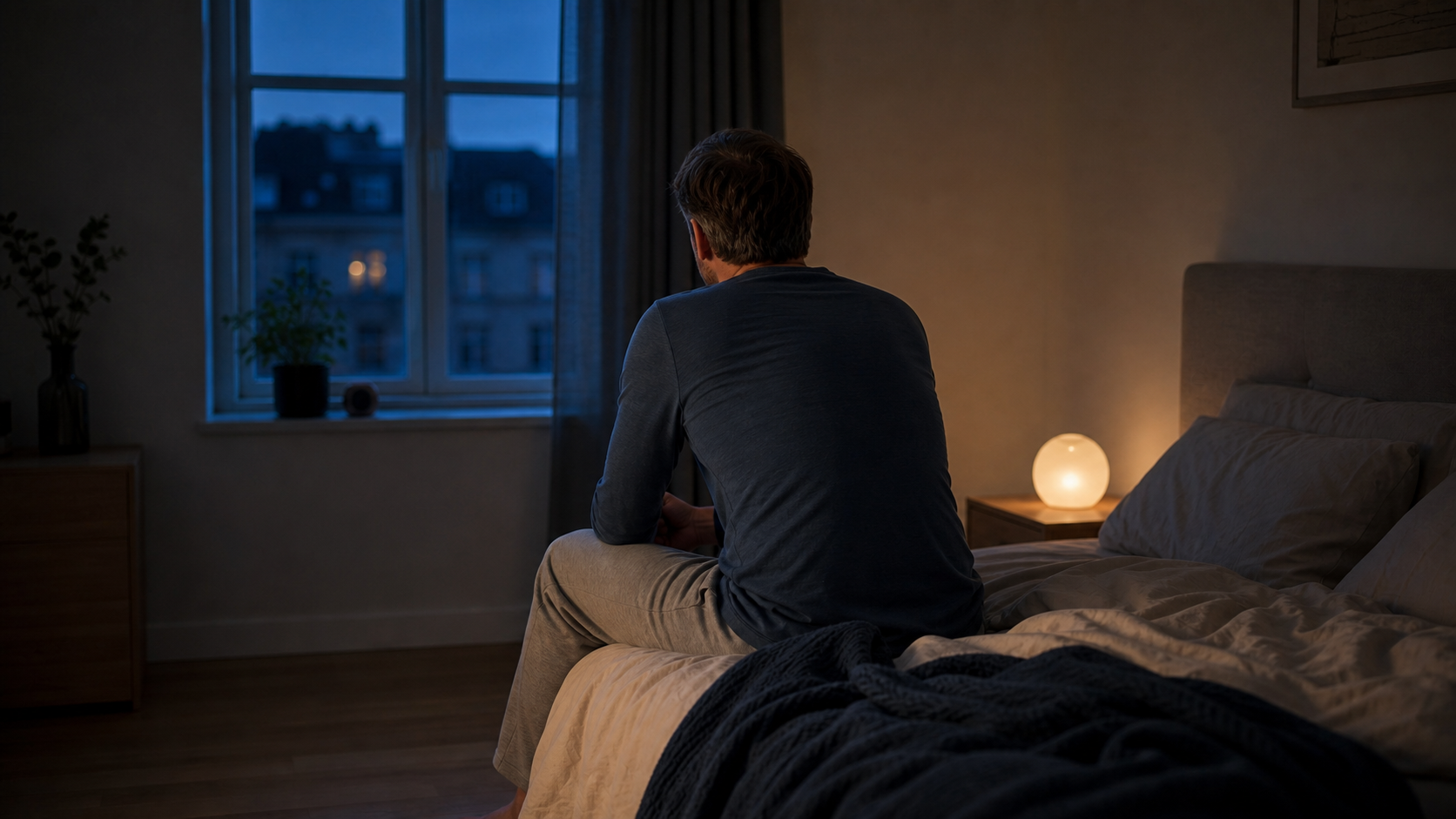
Feeling anxious as bedtime approaches can be lonely, especially when everyone around you seems to treat sleep as simple. You may want to sleep and still feel a strong urge to delay it, monitor it or protect yourself from it. That conflict is real; it is not a sign that you are failing at rest.
In this guide, sleep anxiety is a plain-language description of worry or fear connected with sleep. It is not an explanation of the cause. For one person, the fear is about being awake tomorrow. For another, it is about nightmares, panic, loss of vigilance, breathing symptoms or a frightening event that happened at night. Those experiences deserve different kinds of support.
A useful starting point: you do not have to make yourself sleep on command. The immediate aim can be smaller—reduce the sense of threat, make the next part of the night manageable and notice whether the pattern needs professional attention.
What sleep anxiety can look like
Fear of sleep is not always a dramatic panic at the bedside. It can build quietly through the afternoon and become more noticeable as the day ends. Common experiences include:
- dreading bedtime or delaying it even when you feel tired;
- repeatedly calculating how many hours remain before morning;
- checking your pulse, breathing, clock or sleep tracker for reassurance;
- feeling tense as soon as you enter the bedroom;
- worrying that one poor night will make tomorrow impossible;
- using increasingly rigid rituals because sleep feels unsafe without them;
- feeling relieved when morning arrives, even after very little sleep.
Any one of these can happen after a stressful day or an occasional bad night. The pattern deserves closer attention when it repeats, leads you to avoid sleep, or affects concentration, mood, work, driving or relationships during the day.
Why trying harder can make sleep feel further away
Sleep is not a task we can complete through effort alone. When bedtime starts to feel like a test, the mind naturally looks for evidence of danger or failure: Am I sleepy enough? Is my heart too fast? How late is it now? That monitoring can keep attention active at the very moment you hope to disengage.
A common cycle looks like this:
- A difficult or frightening night creates a strong memory.
- The next evening brings a prediction: “It will happen again.”
- You monitor the time, your body and signs of sleep more closely.
- Extra effort and vigilance make you feel more alert.
- Wakefulness then appears to confirm the original prediction.
This cycle does not mean the problem is “all in your head”. Fear has physical sensations, and poor sleep can make the next day genuinely harder. It also does not mean anxiety is the only possible cause. Recurrent nightmares, trauma symptoms, panic, pain, medication effects, restless legs, sleep apnoea and an unsafe or disruptive environment can all require a different response. A good assessment looks beyond habits.
A lower-pressure plan for a difficult night
These ideas are not a treatment plan and none is a test you need to pass. Choose one that feels safe and realistic. If it adds pressure, leave it.
1. Name what is happening now
Try a factual sentence: “I am awake and anxious right now.” This is more contained than “I will not cope tomorrow” or “I have ruined the night.” You do not need to argue with every thought. The purpose is simply to separate the present moment from a forecast.
2. Move problem-solving out of the sleep period
If worries arrive in bed, give them a short appointment earlier in the evening. Write down the concern and, where possible, one next action for tomorrow. At night, you can remind yourself that the issue has a place to be reviewed. This will not remove every thought, but it can reduce the need to solve your life at 2 a.m.
3. Reduce sleep surveillance
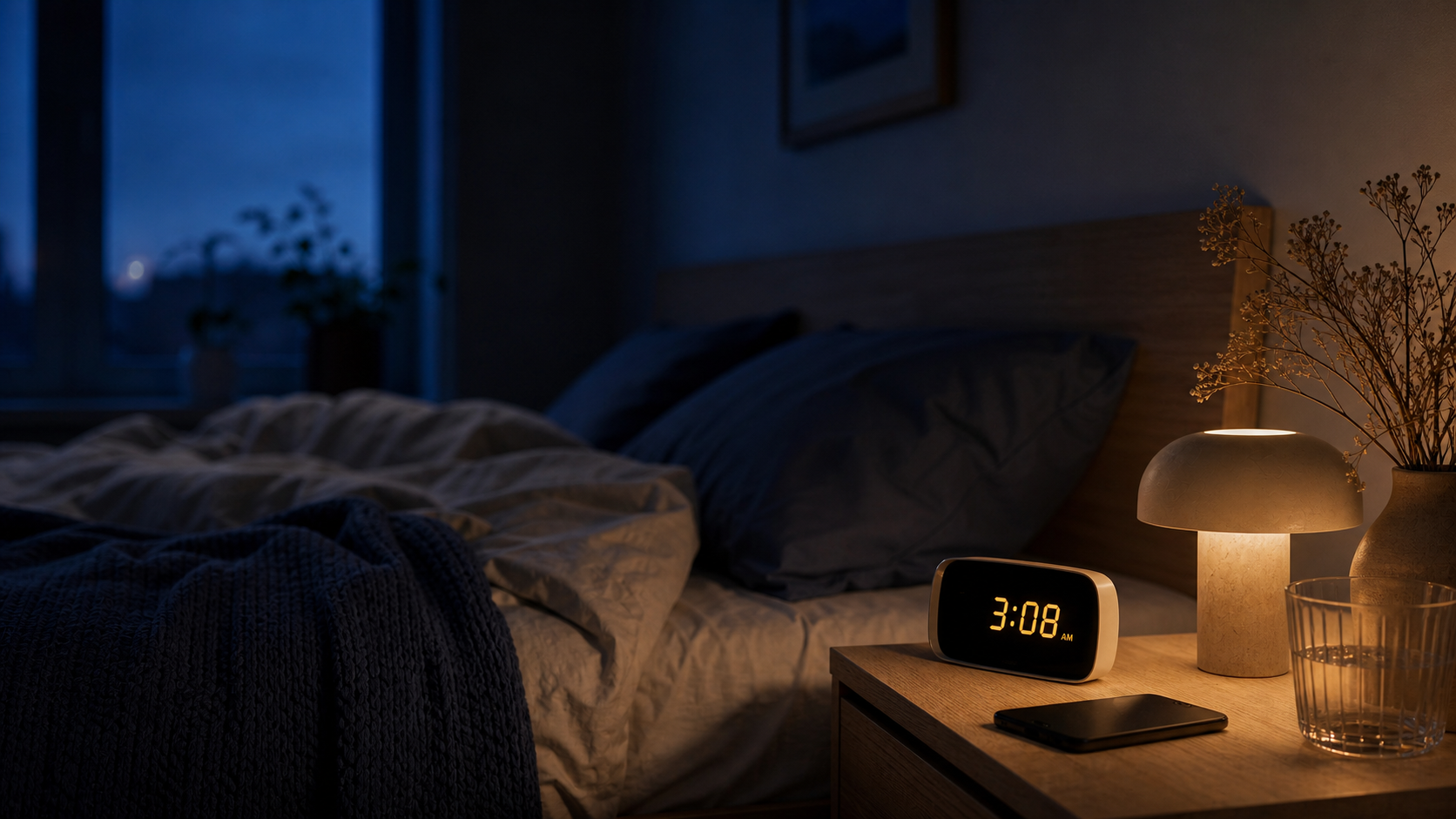
Turn the clock face away and avoid repeatedly opening sleep data. Consumer trackers estimate sleep rather than reading it perfectly, and detailed scores can become another source of checking. If the data helps you notice a broad pattern, use it lightly. If it increases fear, taking a break is reasonable.
4. Build a simple transition, not a perfect routine
Choose two or three low-effort cues: lower the lights, complete essential tasks, and spend a little time with something familiar and unstimulating. Keep the routine flexible enough to survive travel, late work or an imperfect evening. A routine is a cue, not a guarantee.
5. Respond to wakefulness without a battle
If you are calm in bed, you do not need to keep checking whether sleep has arrived. If you are clearly alert, frustrated or frightened, a principle used in cognitive behavioural therapy for insomnia (CBT-I) is to move to a safe, comfortable place for a quiet activity in dim light, then return when sleepiness appears. There is no need to watch a 20-minute timer.
Only do this if moving is safe and practical for you. If mobility, pain, caregiving or personal safety makes leaving bed unsuitable, a clinician can adapt the approach.
6. Re-orient after a nightmare or rush of panic
Look around and name where you are, the date, and a few neutral things you can see or feel. Put your feet on a stable surface if that is comfortable. Let your breathing settle without forcing a large breath or a precise count. Repeated nightmares, nocturnal panic or fear linked to trauma are good reasons to seek tailored support rather than repeatedly managing them alone.
What the bedroom can—and cannot—do
A bedroom does not need to look perfect to support rest. It can help to remove a specific, practical obstacle: intrusive light, intermittent noise, uncomfortable bedding or a temperature you can adjust. Our guide to creating a bedroom that supports sleep starts with the disturbance that affects you most.
If unwanted light or sound is part of the problem, you can explore sleep masks or sound and quiet options. These products may change the environment; they do not treat anxiety, trauma or insomnia, and they cannot guarantee sleep. If you find yourself believing that sleep is impossible without a growing list of products or rituals, that is worth discussing with a professional.
Where CBT-I fits
CBT-I is a structured, multi-part therapy for chronic insomnia. It is more than general sleep tips. Depending on the programme and the person, it may include work on sleep-related thoughts, stimulus control, a carefully planned sleep schedule, relaxation strategies and education about sleep.
The American Academy of Sleep Medicine gives multicomponent CBT-I a strong recommendation for adults with chronic insomnia, and the 2023 European insomnia guideline also recommends it as first-line treatment. The AASM specifically advises against using sleep hygiene as the only treatment for chronic insomnia. A dark room and a regular routine can be useful supports, but persistent insomnia is not proof that you have failed to follow basic advice.
CBT-I should also be matched to the person. One component, sleep restriction therapy, can temporarily increase sleepiness and may be unsuitable without clinical oversight for people in safety-critical work, people predisposed to mania or hypomania, or people with poorly controlled seizure disorders. Do not build an aggressive sleep-restriction schedule from a blog post. Ask a GP, qualified mental health professional or sleep clinician about an appropriate assessment and delivery option.
If fear is mainly connected with trauma, nightmares, panic or feeling unsafe, insomnia-focused work may be only one part of care. A small clinical study found that CBT-I reduced fear of sleep in adults who had both PTSD and insomnia, but that result comes from a specific group and should not be treated as a promise for everyone.
When to ask for professional help
You do not need to wait until the problem feels unbearable. Arrange a conversation with a healthcare or mental health professional if:
- the fear or sleep difficulty has lasted for weeks or months;
- you regularly avoid bed or lose sleep because bedtime feels unsafe;
- nightmares, panic, intrusive memories or hypervigilance keep returning;
- daytime sleepiness affects driving, work, study or basic daily tasks;
- you snore loudly, wake gasping or choking, have an urge to move your legs, act out dreams, or fall asleep unexpectedly;
- you are using alcohol, unprescribed medication or other substances to make sleep feel possible.
Do not drive or operate machinery when you feel sleepy.
A clinician may ask about the timing of the problem, medicines and substances, physical and mental health, daytime effects and other sleep symptoms. A brief sleep diary can help show the pattern, but use one only if recording does not intensify monitoring. Bring a partner’s observations if they have noticed breathing pauses or unusual movements.
If you are thinking about harming yourself, or you do not feel able to keep yourself or someone else safe, seek urgent help now through your local emergency number, urgent mental health service or nearest emergency department. This is not something you need to manage with sleep advice.
Frequently asked questions
Is sleep anxiety a diagnosis?
“Sleep anxiety” is often used to describe fear or worry around sleep, but the phrase alone does not identify the cause. Similar experiences can appear alongside insomnia, an anxiety condition, trauma-related symptoms, nightmares or another sleep or health problem. A clinician can help distinguish them.
Can anxiety make it harder to fall asleep?
Yes. Worry, body tension and close monitoring can increase pre-sleep arousal and make it harder to disengage. But not every difficulty falling asleep is caused by anxiety, so persistent symptoms still deserve a broad assessment.
Why can bedtime itself start to feel frightening?
After repeated difficult nights, the bed and bedtime routine can become cues for worry, alertness or a sense of threat. That learned link can feel powerful, but it is not proof that you have lost the ability to sleep. CBT-I and, where relevant, trauma-informed care can help address the pattern safely.
Is CBT-I the same as sleep hygiene?
No. Sleep hygiene covers general habits and environmental factors. CBT-I is a structured treatment with several cognitive and behavioural components. Clinical guidance does not recommend sleep hygiene alone as treatment for chronic insomnia.
What if I wake at the same time every night?
Repeated clock-checking can make a time feel more fixed and meaningful than it is. Look at the wider pattern—bedtime, wake time, stress, substances, symptoms and daytime effects. Our article on waking at 3 a.m. explains this without assigning one universal cause.
Sources and further reading
- American Academy of Sleep Medicine: behavioural and psychological treatments for chronic insomnia in adults
- European Insomnia Guideline 2023: diagnosis and treatment of insomnia
- NHS: Insomnia—self-care, assessment and when to see a GP
- Journal of Clinical Sleep Medicine: CBT-I and fear of sleep in adults with PTSD and insomnia
- NHS: Where to get urgent help for mental health
This article is general information for adults and is not a diagnosis or a substitute for individual medical or mental health care.
Share:
A Sleep-Friendly Bedroom: Calm Changes That Matter